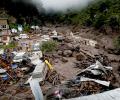
Jammu and Kashmir Chief Minister Omar Abdullah briefed Prime Minister Narendra Modi on a devastating cloudburst in Kishtwar district that claimed 60 lives and injured over 100. Abdullah expressed condolences and assured assistance, while also questioning potential administrative lapses.
The assault occurred as residents were attending Sunday church services.
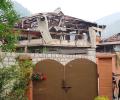
Army spokesman Lt Gen Ahmad Sharif Chaudhry in a media interaction said at least 26 people were killed and 46 injured in the missile strikes on cities in Punjab and PoK. "The six locations that India attacked last night... Pakistan lost 26 people and 46 were injured," he said.
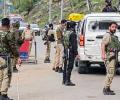
A terror attack on tourists in the Pahalgam area of south Kashmir's Anantnag district has left several injured. Jammu and Kashmir Lieutenant Governor Manoj Sinha condemned the attack and vowed to bring the perpetrators to justice. Chief Minister Omar Abdullah also condemned the attack, calling it an abomination. Several political leaders from the region have denounced the attack and called for a thorough investigation. The attack has raised serious questions about the security situation in Jammu and Kashmir, with the incident being described as the most unfortunate and shameful act by the JKPCC.
'70-80 per cent of the operations are carried out by the SDRF...We also aim to secure the area to make sure that further damage does not take place'

People along the Line of Control and International Border in the Jammu region continue to live under the shadow of death, with unexploded mortar shells fired by Pakistani troops still embedded in farmlands and residential areas even though hostilities have stopped for nearly a week. IMAGE: Kindly note that this image has been posted for representational purposes only. Photograph: / Rediff.com Despite the May 10 understanding between India and Pakistan, locals describe the border areas as a 'death trap'. Sixty-two-year-old Balvinder Singh, who returned to his home in Pargwal sector on May 14, recounted a narrow escape. "Two shells exploded in our compound, damaging our house. Three more landed on our farmland. We were terrified and told our family to stay away from the fields until the Army could help," Singh told PTI. Army engineers later came to the village and safely defused the unexploded shells, bringing a temporary sense of relief. "Fear is writ large on the faces of people to these death traps in border hamlets", he said. Scenes of destruction are evident rooftops torn apart, broken houses, windows punctured by shrapnel, and carcasses of cattle lying in pools of blood. The acrid smell of gunpowder still lingers in the air. Sardar Gurmeet Singh faced a similar ordeal. His family could not re-enter their home as a live mortar shell had sunk into the compound in a village close to the International Border. "The army's bomb disposal squad removed it after four days, allowing us to finally enter, back home," he said. Indian Army engineers have launched a sweeping clearance operation across border districts, defusing over 80 unexploded shells in the past five days -- including 6 in Pargwal, 19 in Rajouri, 42 in Poonch, and 12 along the IB. "These shells, mostly 120 mm calibre, have a range of 15 to 30 km and pose a serious threat to both civilian and military targets," an Army officer said. "Many of them were fired by Pakistan during recent hostilities." On May 7, the Indian Army launched Operation Sindoor, conducting precision strikes on nine terror hubs in Pakistan and Pakistan-occupied Jammu and Kashmir (PoJK) in response to the April 22 terror attack in Pahalgam that killed 26 people, most of them tourists. The subsequent retaliation by Pakistan pushed the region to the brink of war. From 7 to 10 of May, 27 civilians were killed and over 70 injured in Pakistani shelling in the Jammu region. Farid Din Gujjar, a resident near the border, expressed fear about returning to his fields. "Several shells created deep craters in our paddy land. We cannot resume work until all unexploded ordnance is cleared. It's a death trap," he said. Army units, in coordination with Jammu and Kashmir Police, have evacuated high-risk zones and issued stern warnings to residents not to touch any suspicious objects or unexploded shells. In one major operation, 42 live shells were safely destroyed in the Poonch villages of Jhullas, Salotri, Dharati and Salani. "All safety protocols were followed. The shells posed a serious danger to local lives," an Army spokesperson said, calling the effort a 'continued commitment to protect civilians and restore normalcy'. Poonch saw the vast majority of deaths due to shelling. Security officials said that Pakistan used a mix of mortar shells, armed drones, and missiles during the shelling spree, specifically targeting civilian habitations and border towns in Jammu, Samba, Kathua, Rajouri, and Poonch. As clearance operations continue, the border residents are slowly returning to their homes, but with caution, fear, and lingering uncertainty about shelling that may yet happen in the future.
Eight civilians including three children were injured in heavy Pakistan firing in Jammu on Thursday evening.

US Secretary of State Marco Rubio on Thursday spoke separately with External Affairs Minister S Jaishankar and Pakistani Prime Minister Muhammad Shehbaz Sharif, emphasising the need for de-escalation and reiterated his calls for Pakistan to take concrete steps to end any support for terrorist groups.

Following the Pahalgam terror attack, the Indian Army launched Operation Sindoor, targeting Pakistani terror infrastructure and posts in the Poonch sector of Jammu and Kashmir. Over 600 artillery shells were fired in three days, decimating 20 Pakistani posts used for infiltrating terrorists into India. The precision strikes crippled enemy logistics, material, and morale, prompting retaliatory attacks by Pakistan on civilian areas. Despite the retaliation, Indian Army officers described the operation as a success, highlighting the high morale of the troops and the effective coordination between artillery and air defense units. The article details the intensity of the artillery shelling and the impact on both sides, highlighting the strategic significance of the Poonch sector and the ongoing tension between India and Pakistan.
The Border Security Force (BSF) is raising a maiden 'drone squadron' for deployment along the India-Pakistan border. The squadron will comprise reconnaissance, surveillance and attack drones and specially-trained personnel.
Pakistan on Wednesday summoned the Indian charg d'affaires and lodged a strong protest against the Indian military strikes.
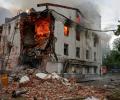
Three firefighters were killed in Kyiv, two civilians were killed in Lutsk, and another person was killed in Chernihiv, according to the Ukrainian State Emergency Service, as per CNN.

World leaders, including US President Donald Trump, Russian President Vladimir Putin and Israeli Prime Minister Benjamin Netanyahu, condemned the terror attack in Jammu and Kashmir that killed 26 people, expressing solidarity with India. The attack was claimed by The Resistance Front (TRF), a proxy of the Pakistan-based Lashkar-e-Taiba (LeT) terrorist group. The attack came during US Vice President J D Vance's maiden visit to India. Prime Minister Modi, who had arrived in Saudi Arabia on a two-day visit earlier in the day, cut short his visit and departed for New Delhi on Tuesday night following the attack.

"Multiple videos from the scene also show a suspect being apprehended by police in a [nearby] wellness centre," CNN reported.
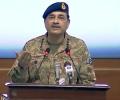
Munir said that the entire nation stands in resolute solidarity with every member of its Armed Forces.
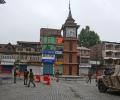
Raj Kumar Thapa, additional district development commissioner, Rajouri, and his two staff members were seriously injured when an artillery shell hit his official residence in Rajouri town, the officials said.

A villager was killed and three others were injured in shelling by Pakistan in forward areas of Jammu and Kashmir's Poonch and Rajouri districts early Friday morning, prompting Army troops to retaliate. The shelling also caused significant damage to property, with many houses and hundreds of vehicles affected. The firing and shelling were directed at areas in Rajouri, Poonch, and Jammu districts, apart from Kashmir's Kupwara and Baramulla districts, overnight.
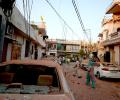
Pakistan's drone strikes and mortar shelling targeted six locations in Jammu, including the densely populated Rehari Colony, leaving one person injured and causing widespread damage. Residents described scenes of devastation and expressed fear, while others voiced defiance and called for action against Pakistan. The attacks, which occurred early Saturday, have been condemned by Jammu and Kashmir's Chief Minister Omar Abdullah as the "worst targeting of civilians in Jammu city since 1971."

The Israel Defence Force (IDF) on Sunday alleged that the terror group Hamas is blocking the evacuation of civilians in the Gaza Strip ahead of the possible ground offensive by Israel after the deadly attacks on October 7.

Three civilians picked up by the Army for questioning after the terrorist ambushed two Army vehicles on Thursday at Dhatyar Morh between Dhera Ki Gali and Buffliaz in Poonch were found dead on December 23.
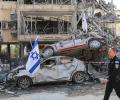
Iran fired around 200 ballistic missiles and drones at Israel on Saturday, June 14, 2025, causing widespread damage in communities in north Israel, killing three people and injuring dozens.

India has voiced deep concern over the deteriorating security situation and large-scale loss of civilian life in the ongoing Israel-Palestine conflict, urging the parties to work towards creating conditions necessary for peace and restarting direct negotiations through de-escalation and ending violence.
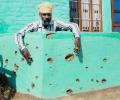
Five other civilians injured as Pak troops shelled border out posts along the IB.

A large fire was reported on Saturday night at a strategic complex near Haifa in northern Israel after Iran launched a barrage of missiles and drones, MEHR News Agency reported, citing local media.
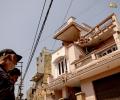
The casualties were reported hours before India and Pakistan agreed to end hostilities, which soared after the Indian Armed Forces hit terror launchpads in Pakistan and Pakistan-occupied Kashmir earlier this week in response to the Pahalgam attack.
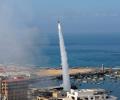
The missile hit a plantation in Margaliot, a moshav (collective agricultural community), in the Galilee region in the north of Israel around 11 am on Monday, Zaki Heller, spokesperson for rescue services Magen David Adom (MDA), told PTI.

Iran's supreme leader, Ayatollah Ali Khamenei, on Wednesday warned Israel and said that the "Zionist regime made a grave mistake" and "will face the consequences of its actions".

India strongly rejected Pakistan's 'unwarranted aspersions' over United Nations processes and attempts to deflect attention from atrocities committed against children in the country and rampant cross-border terrorism, asserting that the world has not forgotten the Pahalgam attacks.

Congress leader Rahul Gandhi visited Poonch in Jammu and Kashmir, offering condolences to families affected by cross-border shelling and encouraging students who lost two classmates to the violence. During an hour-long visit, Gandhi met with students at the convent school that lost the twins, and visited families whose homes were damaged in the shelling.

Expressing shock over the tragic loss of lives in an attack on an hospital in Gaza, Prime Minister Narendra Modi on Wednesday said civilian casualties in the ongoing conflict were a matter of serious concern and those involved should be held responsible.
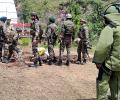
The officials said dozens of unexploded explosives were destroyed by the experts along the Line of Control in Rajouri and Poonch districts and along the International Border in Jammu and Samba which witnessed intense cross-border shelling and drone attacks from May 7 to May 10.

Emotional scenes were witnessed across the country as the last rites of those killed in shelling by Pakistan during the recent military conflict with India were performed on Sunday.

In a heinous terror attack, two Indians were killed while one was abducted in the Dosso region of Niger, as noted by the Indian Embassy in Niger.

The firing and shelling from across the border in Shahpur and Kirni sectors was retaliated by the Indian Army, but the casualties suffered by Pakistan was not known immediately, they said.

The BRICS nations condemned the Pahalgam terror attack, advocated for a zero-tolerance approach to terrorism, and criticized rising tariffs during their summit in Rio de Janeiro. They also addressed global challenges and called for reforms in international institutions.
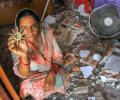
The latest shelling from across the border started in the Qasba and Kirni sectors along the LoC in Poonch district at 1.40 pm, prompting a befitting retaliation by the Indian Army, a defence spokesperson said.

Nearly a dozen grenade attacks have taken place in the valley since Thursday.

The Supreme Court of India strongly condemned the terrorist attack in Pahalgam, Kashmir, that killed at least 26 people, mostly tourists. The court observed a moment of silence in tribute to the victims and expressed condolences to their families. The attack was described as an affront to the values of humanity and the sanctity of life. The Supreme Court Bar Association and other legal bodies also condemned the attack and expressed solidarity with the victims and their families.
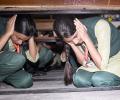
India conducted nationwide civil defence mock drills simulating multiple hostile scenarios like air raids, fire emergencies, and rescue operations across several states and union territories. The drills, dubbed 'Operation Abhyaas,' aimed to enhance emergency preparedness in light of recent terror attacks. The exercises involved coordinated efforts by various agencies, including civil defence personnel, police, fire and emergency services, and the military. Mock drills were conducted at various locations, including railway stations, malls, and high-rise buildings, showcasing the response capabilities of authorities in different emergency scenarios. The drills highlighted the importance of public awareness and cooperation in dealing with real-time emergencies.
Lashkar-e-Taiba terrorist Razaullah Nizamani Khalid alias Abu Saifullah Khalid, who was the brain behind the 2006 attack on the Rashtriya Swayamsevak Sangh headquarters, was killed by three unidentified gunmen in Sindh province of Pakistan on Sunday, officials in New Delhi said.
